What to Do After an Arrest in Valdosta GA: A Criminal Attorney's Step-by-Step Guide
An arrest in Valdosta moves fast. Every decision you make in the first few hours carries real legal weight, and early mistakes follow you directly into court.
Richard A. Wilkes has spent over 20 years defending clients across Lowndes County, working inside the same courtrooms, against the same prosecutors, and alongside the same law enforcement agencies you now face.
Whether you were just released from custody, supporting someone close to you, or preparing before charges are filed, what you do right now matters. Follow each step carefully.
Your Rights the Moment You Are Arrested in Georgia
Knowing your rights at the moment of arrest shapes every decision that follows. Georgia law provides specific constitutional protections worth understanding before anything else.
Right to Remain Silent: Georgia only requires your name, age, and address; anything you volunteer beyond that can be used against you in court.
Right to an Attorney: Request legal counsel before answering any police questions; all questioning must stop the moment you invoke that right.
Miranda Rights: Officers must read your Miranda rights before any custodial questioning begins; statements made without this warning may be inadmissible in court.
Right to Refuse a Search: Without a valid warrant, you can legally decline consent to search your person, vehicle, or property.
Physical Compliance vs. Verbal Silence: Cooperate physically with officers; exercising your right to remain silent does not mean resisting arrest in any way.
Georgia Legal Aid provides a full breakdown of your arrest rights under Georgia state law.
What Happens During Booking at Lowndes County Jail
After an arrest in Valdosta, officers transport you to Lowndes County Jail or a city detention facility. Booking follows a set sequence every time.
Personal Items Inventoried: Officers collect and log all belongings on your person upon arrival.
Fingerprinting and Mugshot: Standard intake procedure recorded and entered into the state system.
Information Recorded: Full name, date of birth, home address, and charges get formally documented.
One Phone Call: Use it to contact a criminal defense attorney, not just a family member.
Holding Cell: Officers place you in a cell until a bond hearing is scheduled or a release order is issued.
Booking is administrative intake only. Nothing about it determines guilt or the outcome of your case.
The Bond Hearing: How Release Works in Valdosta
Georgia law requires a first appearance before a magistrate judge within 72 hours of arrest. Arrests made without a warrant move to that hearing even faster. At first appearance, a judge reads the charges and sets bond conditions.
Four bond options are available depending on the circumstances:
Own Recognizance: No payment required; you sign a written promise to appear at all future court dates.
Cash Bond: Full bail amount paid directly to the court before release.
Property Bond: Real estate owned by you or a family member used as collateral.
Bail Bondsman: A bondsman covers the full amount for a non-refundable fee, typically 10 to 15 percent of the total bond.
A criminal defense attorney in Valdosta can appear at first appearance and argue for a lower bond amount before a judge sets it in stone. If bond comes in too high, a Motion for Bond Reduction remains an option worth filing immediately.
Four Mistakes That Damage Criminal Cases in Georgia
Most people make at least one of these mistakes before ever speaking to an attorney. Each one costs you more than you realize.
Talking to Police Without Counsel Present: Silence protects you. Anything said to officers before an attorney arrives can surface directly in court, regardless of how innocent it sounds in the moment.
Posting About the Arrest on Social Media: Prosecutors screenshot posts, check-ins, and status updates. Even an emotional comment about your day can become evidence against you.
Delaying Private Legal Representation: Surveillance footage gets deleted within days. Witnesses lose detail quickly. Waiting a week to hire counsel means losing evidence that could never be recovered.
Missing Court Dates or Violating Bond Conditions: Failure to appear in a Georgia court adds a separate criminal charge instantly and triggers immediate bond revocation.
Why Calling a Criminal Attorney Early Changes the Outcome
Timing determines what options stay open. Here is what an attorney can do in the first 48 hours that cannot be done later.
Evidence Gets Preserved Before It Disappears
Surveillance footage from businesses and traffic cameras gets overwritten within 48 to 72 hours in most cases. Attorney Richard A. Wilkes sends legal preservation letters immediately after being retained, formally requiring that footage, body cam recordings, and witness statements get held before deletion cycles erase them.
Most people wait three to five days before making that call. By then, key evidence is often gone permanently.
Procedural Violations Get Challenged at Full Strength
Unlawful stops, improper search procedures, and Miranda violations carry the most legal weight before a case solidifies. Early involvement means reviewing police reports and arrest records while details remain fresh and challengeable. Visit our frequently asked questions for more on how procedural errors affect case outcomes.
Bond Reduction Begins With Your First Call
Arguing Bond at First Appearance: An attorney can appear before a judge and push for a lower bond amount before any number gets formally set.
Motion for Bond Reduction: A Motion for Bond Reduction can be filed immediately if the initial amount comes in higher than the circumstances warrant.
Local Court Familiarity: Knowing Lowndes County judges and prosecutors directly shapes which arguments carry weight in that courtroom.
How the Criminal Process Unfolds After Arrest in Georgia
Knowing what comes next reduces uncertainty. Georgia criminal cases follow a consistent sequence, though timelines vary by charge and court.
First Appearance (Within 72 Hours): A magistrate judge reads the charges, sets bond conditions, and confirms whether you have legal representation.
Arraignment: You enter a formal plea of guilty, not guilty, or no contest before the court.
Preliminary Hearing: A judge reviews whether the prosecution holds enough probable cause to move forward with charges.
Pretrial Motions: Your attorney challenges evidence, unlawful searches, procedural errors, and any statements obtained improperly.
Plea Negotiation or Trial: Most Georgia criminal cases reach a negotiated resolution before trial ever begins.
Sentencing: If convicted, a judge determines penalties based on charge severity and prior criminal history.
Georgia Courts provides a full overview of how criminal cases move through the state court system.
Public Defender vs. Private Criminal Attorney in Valdosta
Before deciding on representation, consider what each option actually provides in practice.
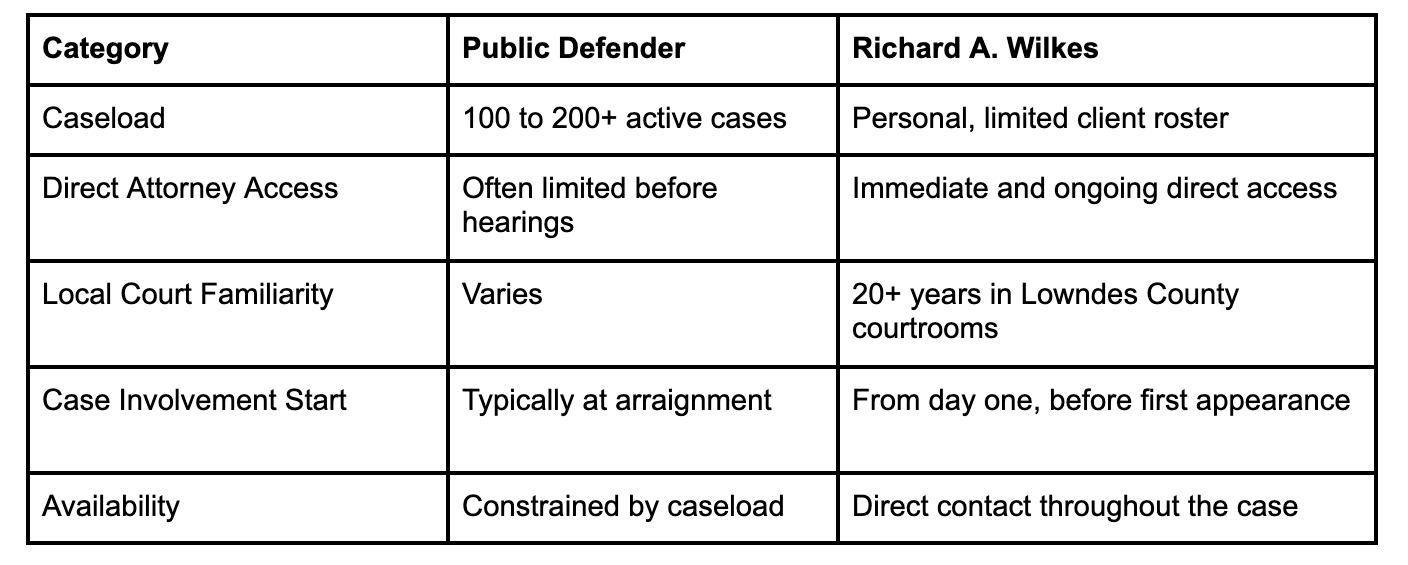
Public defenders are qualified attorneys who serve a necessary role in Georgia's court system. What differs is bandwidth and when involvement begins. For cases involving drug charges or DUI charges, early private representation often determines which defense options remain available.
Your Next Step Starts With One Call
Every hour after an arrest without legal representation is an hour prosecutors use to strengthen their case against you. Richard A. Wilkes has defended individuals across Valdosta and Lowndes County for over 20+ years, working inside the same courts and against the same prosecution teams you now face.
Call before you say another word to police or investigators. A free consultation carries no pressure and no commitment, just honest answers about where your case stands and what needs to happen next.
Call 229-375-0291 or Contact now for your free consultation.
FAQs
How long can police hold you without filing charges in Georgia?
Georgia law requires a first appearance before a magistrate judge within 72 hours of arrest. Arrests made without a warrant move to that hearing sooner.Can you refuse to answer police questions in Georgia?
Outside of a traffic stop, you hold the full right to remain silent under the Fifth Amendment. Invoking that right is legal and protected.Does an arrest appear on a background check in Georgia?
An arrest without a conviction can still appear on your record. Georgia allows record restriction under specific eligibility conditions worth discussing with an attorney.What should I do if I cannot make bail in Lowndes County?
Contact a criminal defense attorney immediately. A Motion for Bond Reduction can be filed, or a licensed bail bondsman can cover the amount for a fee.When is the right time to call a criminal defense attorney after an arrest?
Immediately. Call before speaking to police, before signing anything, and before your first court appearance to keep every legal option available.
