
Going Through a Divorce in Valdosta GA? Here's What a Family Attorney Wants You to Know First
Starting a divorce brings fear, confusion, and questions most people have never had to face. Few moments carry as much emotional weight, and knowing where to begin legally changes how you move forward.
Richard A. Wilkes has helped Lowndes County families with domestic law services in Valdosta for over 20 years, covering property division, child custody, and support. Going through a divorce in Valdosta GA means working within Georgia-specific laws that directly shape your finances and parenting rights. Call 229-375-0291 today to schedule a free consultation.
Georgia Has Specific Divorce Requirements You Must Meet First
Before filing for divorce, Georgia law requires specific residency and procedural conditions to be met. Check the Georgia Courts divorce filing guide for official filing steps, and consult an attorney before submitting any paperwork.
Residency: At least one spouse must have lived in Georgia for six continuous months before a petition can be filed in state court.
Filing location: Divorce petitions must be filed in the county where the respondent lives. Valdosta residents file at Lowndes County Superior Court.
Grounds for divorce: Georgia law under O.C.G.A. § 19-5-3 recognizes no-fault grounds (irretrievable breakdown of the marriage) and fault-based grounds including adultery, desertion, and cruel treatment.
No separation required: Georgia does not require couples to live apart before filing. A case moves forward without a mandatory separation period.
Contested vs. Uncontested: What Georgia Divorce Law Says
Knowing which type of divorce applies to your situation determines your timeline, legal costs, and how much court involvement to expect.
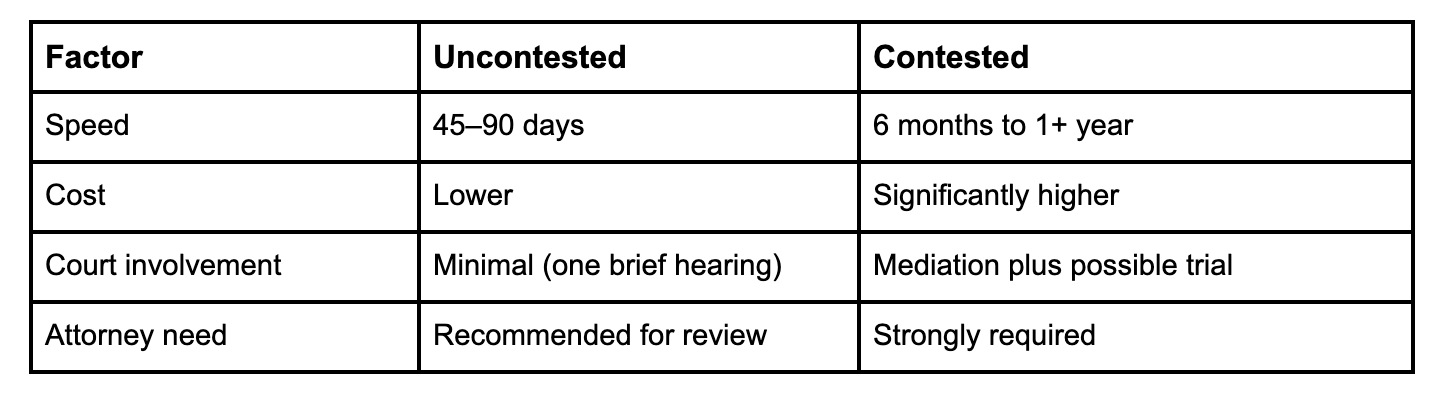
An uncontested divorce in Georgia requires both spouses to agree on every term, including property, custody, and support, before filing. A contested divorce means at least one issue remains unresolved and moves toward mediation or a Lowndes County Superior Court hearing.
Three signs your divorce may become contested:
One spouse retains legal counsel and the other does not: An unrepresented spouse faces a significant disadvantage during negotiations over assets and parenting arrangements.
Children or shared property are involved: Disagreements over custody schedules or financial accounts are among the most common reasons cases escalate to court.
Direct communication between both parties has broken down completely: When productive agreement becomes impossible, a judge steps in and decides unresolved issues for both spouses.
Georgia Marital Property Division: What the Law Actually Says
Georgia follows equitable distribution, meaning a court divides marital assets fairly based on the full circumstances of the marriage rather than splitting everything equally down the middle.
Marital property covers assets and debts acquired during the marriage. Assets owned before the marriage, inheritances, and personal gifts generally qualify as separate property and stay protected.
A Lowndes County judge weighs several factors when determining a fair division:
Length of the marriage: Longer marriages typically result in more balanced asset distribution between both spouses.
Each spouse's income and earning capacity: Future financial ability factors into how property and debt obligations get assigned after separation.
Financial contributions and conduct during the marriage: Courts consider both monetary contributions and behavior that affected marital finances.
High-conflict assets: Family homes, retirement accounts requiring a QDRO, and business ownership often become the most disputed items in property proceedings.
A divorce lawyer in Valdosta GA can negotiate property terms directly with the opposing party before a judge ever gets involved, which saves both time and legal costs.
Child Custody and Support: What Valdosta Parents Need to Understand
Custody decisions carry more long-term weight than almost any other part of a divorce. Parents in Valdosta need a clear picture of how Georgia law structures these arrangements before stepping into any negotiation or courtroom.
Legal Custody vs. Physical Custody in Georgia
Georgia law separates custody into two distinct categories. Legal custody covers decision-making authority over a child's education, healthcare, and religious upbringing. Physical custody determines where the child primarily lives day to day. Courts can award either type as sole custody to one parent or joint custody shared between both, depending on what best serves the child's stability and wellbeing.
How Georgia Courts Determine Custody
Judges handling child custody in Valdosta GA apply the best interests of the child standard under the Georgia child custody statute O.C.G.A. § 19-9-3. Four factors carry significant weight in every custody evaluation:
Prior caregiving role: Judges look closely at which parent managed daily responsibilities like school pickups, medical appointments, and nighttime routines before the divorce filing.
Stability of each parent's home environment: Courts favor arrangements that preserve the child's existing school, community connections, and daily routine without unnecessary disruption.
History of domestic violence or substance abuse: Any documented pattern of abuse or addiction directly affects custody outcomes and can restrict or modify visitation rights.
Child's stated preference at age 14 or older: Georgia law gives meaningful weight to a teenager's preference, though judges retain final authority over all custody decisions.
Child Support in Georgia
Georgia calculates child support using the Income Shares Model, which factors in both parents' gross incomes alongside the agreed time-sharing arrangement. Higher-earning parents generally carry a larger share of the financial obligation. Every divorce complaint with children in Georgia also requires a parenting plan covering holidays, school decisions, medical authority, and future modification procedures. A family law attorney can help structure both documents to reflect your specific situation accurately from the start.
Divorce Checklist Georgia: What to Gather Before You File
Before filing for divorce in Georgia, organizing your documents early gives your attorney a stronger starting position and prevents costly delays. Contact with a Valdosta family attorney first before submitting any paperwork to avoid procedural mistakes.
Gather three years of tax returns: Joint and individual returns establish income history and financial patterns that courts review closely during property and support proceedings.
Pull all bank and investment account statements: Statements from the past 12 to 24 months document marital assets and spending behavior relevant to equitable distribution negotiations.
Locate mortgage and real property documents: Knowing current loan balances, equity positions, and ownership structure helps your attorney assess realistic options for handling the family home.
Document your children's school, medical, and activity schedules: Courts evaluate parental involvement heavily, and having organized records from day one strengthens your custody position significantly.
List every marital asset and shared debt: A complete inventory makes it harder for the opposing party to misrepresent or conceal assets during the discovery process.
Avoid major financial decisions before filing: Large purchases, asset transfers, or account withdrawals made before filing can draw judicial scrutiny and complicate your case considerably.
Do not vacate the marital home without legal guidance: Leaving before speaking with a Valdosta GA divorce attorney can be used against you in both property division and custody arguments.
How Long Does a Divorce Take in Georgia? Realistic Timelines
Actual timelines vary based on case type, level of agreement between spouses, and local court availability.
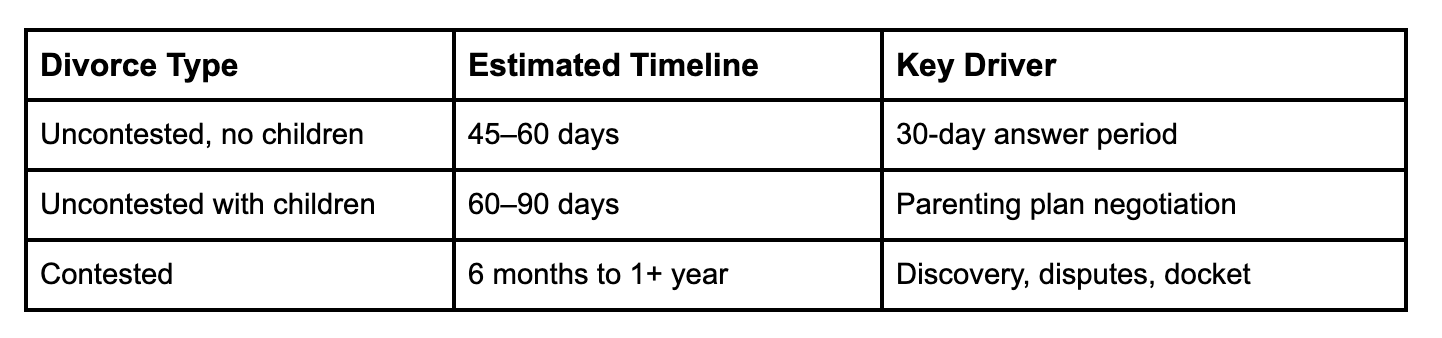
Lowndes County court docket schedules directly affect when hearings get assigned, which means local knowledge of courthouse procedures matters more than most people expect. Attorney involvement in contested cases shortens timelines by reducing procedural errors and keeping negotiations moving forward efficiently.
When You Need a Valdosta Family Attorney and When You Might Not
Not every divorce requires the same level of legal involvement. Knowing where your situation falls helps you make a smarter decision about how to proceed.
DIY may work if:
Both spouses agree on every term without outside pressure or conflict
No minor children are involved in the separation
Neither spouse holds significant assets, property, or shared debt
Marriage lasted a short period with minimal financial entanglement
Both parties communicate cooperatively and want to keep costs low
You need an attorney if:
Children are involved and custody or support terms remain unresolved
Significant marital assets, retirement accounts, or business ownership exist
A history of domestic violence or safety concerns affects negotiations
Your spouse has already hired a divorce attorney Valdosta GA residents trust
Debt division, real estate equity, or pension accounts require legal structuring
Even in fully cooperative divorces, a single missing clause in a settlement agreement can create expensive legal problems years later. Richard A. Wilkes has helped Valdosta families work through divorce proceedings for over 20 years, and every case receives direct attorney attention from start to finish.
Your Divorce Decisions Deserve Experienced Local Counsel
No two divorces follow the same path. Financial situations, parenting arrangements, and personal circumstances all shape how a case moves forward. Getting accurate legal guidance early prevents mistakes that take years and significant money to correct.
Richard A. Wilkes brings over 20 years of direct courtroom experience in Lowndes County to every family case he handles. Every client receives personal attorney attention, not a paralegal or a case number. If you are facing a Valdosta GA divorce and want honest answers about where you stand, call 229-375-0291 or contact The Wilkes Firm today to schedule a free consultation. An honest conversation with a local attorney who knows Lowndes County courts is always the right first step.
FAQs
How much does a divorce attorney cost in Valdosta GA?
Costs vary based on case complexity, but most divorce attorneys in Valdosta GA offer a free initial consultation so you fully understand your options before making any financial commitment.Can I get a divorce in Georgia without going to court?
Uncontested divorces in Georgia often require only one spouse to attend a brief final hearing, making the overall process faster and far less confrontational than a contested proceeding.What happens if my spouse refuses to sign divorce papers?
Georgia law allows a divorce to move forward without the other spouse's cooperation, provided all legal service requirements and court filing procedures have been properly completed.Does Georgia require a separation period before filing?
Georgia imposes no mandatory separation period before a spouse can file. Residency and procedural requirements still apply, and a family attorney can clarify exactly what your case needs.Can I divorce a spouse who is in jail in Georgia?
Divorcing an incarcerated spouse in Georgia involves specific service of process steps and additional procedural requirements. Schedule a free consultation with an attorney before filing to avoid costly errors.
