
Child Custody in Valdosta, GA: What Every Parent Needs to Know
Custody decisions in Valdosta are made by a judge in Lowndes County Superior Court. Georgia law does not allow juries to decide custody matters. Every ruling comes down to one legal standard: what serves the best interests of the child under O.C.G.A. § 19-9-3.
Whether you are facing a contested hearing or working toward an agreement, having a local attorney who knows how Lowndes County courts operate makes a real difference. Richard A. Wilkes has helped Valdosta families protect their parental rights through every stage of the custody process.
The Two Types of Child Custody in Georgia
Before you step into a Lowndes County courtroom, you need to understand what custody actually covers. Georgia law recognizes two distinct types, and a judge can award each one jointly or solely, independent of the other.
Legal custody gives a parent the authority to make major decisions about a child's education, medical care, and religious upbringing. Physical custody determines where the child lives on a daily basis.
Courts in Georgia carry no presumption favoring either parent for either type, as stated under O.C.G.A. § 19-9-3(a)(1). A judge evaluates each case on its own facts.
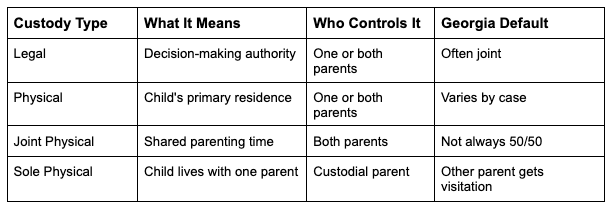
Parents who want to file for custody in Georgia can begin the process through the Superior Court in their county. Understanding which type of custody you are seeking helps you and your attorney build a focused, effective case from the start.
Factors Georgia Courts Use in Custody Cases
Georgia judges hold full discretion when deciding custody outcomes. No fixed checklist exists. Under O.C.G.A. § 19-9-3, a judge may weigh any relevant factor that affects a child's welfare.
Factors courts commonly evaluate include:
Emotional bond between the child and each parent
Each parent's ability to meet daily needs such as food, clothing, and medical care
Stability of each parent's home environment
Mental and physical health of everyone involved
School, community, and sibling connections the child has built
Any history of domestic violence, substance abuse, or criminal conduct
Recommendations from a guardian ad litem, when one is appointed
A guardian ad litem investigates the family's circumstances independently and presents findings directly to the court. Judges give significant weight to that report.
Child Preference in Georgia Custody Cases
Age plays a direct role in how much influence a child holds over the outcome. For children between ages 11 and 13, a judge considers the child's preference but is not legally bound by it.
Once a child reaches age 14, Georgia law grants that child the right to select a parent. Under O.C.G.A. § 19-9-3(a)(5), that selection carries presumptive weight, meaning a court will follow it unless doing so conflicts with the child's best interests.
Mistakes Parents Make in Valdosta Custody Cases
Even well-intentioned parents make errors that hurt their position in court. Avoiding these mistakes before and during your case protects your credibility with the judge.
1. Prioritizing personal conflict over your child's needs
Judges in Lowndes County identify this pattern quickly. Putting your grievance with the other parent ahead of your child's stability signals poor judgment. Courts respond accordingly, and your credibility with the judge takes a direct hit when personal conflict drives your decisions.
2. Violating a temporary custody order
Temporary orders carry real legal weight in Georgia courts. Breaking one, even once, sends a clear message to the judge that you will not respect a final order either. Compliance is non-negotiable from the moment an order is issued.
3. Posting on social media during your case
Photos, location check-ins, and comments made online are discoverable evidence in custody proceedings. Opposing attorneys routinely review social media accounts before and during hearings. What you post publicly can and will be used to challenge your character in court.
4. Blocking the other parent's access without authorization
Georgia courts treat unauthorized denial of parental access as a direct failure to co-parent. Judges view it as one of the most damaging findings they can make against a parent, and it significantly weakens your standing in the case.
5. Representing yourself in a contested hearing
Georgia custody law involves specific statutes, filing procedures, and firm judicial expectations. Parents without legal representation consistently face less favorable rulings. An experienced attorney understands how Lowndes County courts operate and presents your case in the most effective way possible.
Understanding What Valdosta Judges Look for at a Custody Hearing
Winning a custody hearing in Georgia requires more than showing up prepared on the day. Judges evaluate your behavior, your home, and your choices long before you walk into the courtroom.
Keep a Record of Your Parental Involvement: Write down school pickups, medical appointments, and daily caregiving activities. Dates and details matter when your attorney presents evidence of your active role in your child's life.
Maintain Consistency At Home: Stable routines, appropriate housing, and the people living in or visiting your home all factor into a judge's evaluation. Instability at home weakens your position regardless of how well you perform in court.
Stay off Social Media During Proceedings: Anything posted online can surface in a hearing. Avoid commenting on your case, your co-parent, or anything that a judge could interpret negatively.
Follow Every Court Order Without Exception: Compliance with temporary orders demonstrates to the court that you respect legal authority. Judges notice when parents selectively follow orders.
Cooperate with the Guardian Ad Litem
A GAL investigates both households and submits a report the judge relies on heavily. Obstruction or hostility toward a GAL hurts your case significantly.Present Yourself Professionally at the Lowndes County courthouse
Dress appropriately, arrive early, and speak respectfully. Working with a family law attorney in Valdosta before your hearing date ensures you walk in prepared and confident.
Your Child's Future Deserves the Right Legal Support
Custody orders in Georgia stay in effect until a child turns 18. Every decision made during your case shapes years of your child's life. Getting sound legal guidance from the start is not optional — it is what protects your rights and your relationship with your child.
Richard A. Wilkes and his team provide family law services in Valdosta and throughout south Georgia, handling custody, divorce, and related family matters. Lowndes County judges hold full discretion over outcomes. Working with an attorney who knows local court procedures and judicial expectations gives you a measurable advantage.
Schedule a free consultation with Richard Wilkes today and get clear answers about your custody options.
FAQs
How long does a child custody case take in Georgia?
An uncontested case can resolve within a few weeks after filing. A contested case, where parents disagree on key issues, typically takes between six and twelve months in Lowndes County, depending on court scheduling and case complexity.At what age can a child choose which parent to live with in Georgia?
At age 14, Georgia law grants a child the right to select a parent. Under O.C.G.A. § 19-9-3(a)(5), courts treat that selection as presumptive. A judge will only override it if placing the child with the chosen parent conflicts with the child's wellbeing.Can a mother lose custody in Georgia?
Yes. Georgia courts apply identical standards to both parents. No gender presumption exists under state law. A mother loses custody when evidence shows that awarding custody to the father better serves the child's interests.Do I need a custody lawyer in Valdosta, GA?
Hiring an attorney is not legally required, but unrepresented parents regularly receive less favorable rulings. A local attorney understands Lowndes County court procedures, local judicial expectations, and how to present your case effectively.What happens if one parent wants to relocate with the child?
Relocating with a child without court approval violates an existing custody order in Georgia. A parent who wants to move must file a petition to modify custody. Courts evaluate whether relocation serves the child's best interests before granting or denying the request.
